Business, digital transformation | Enterprise agility Marketing, product management | Portfolio, value management | Delivery at scale

Change Management and High Jump

Written in

by

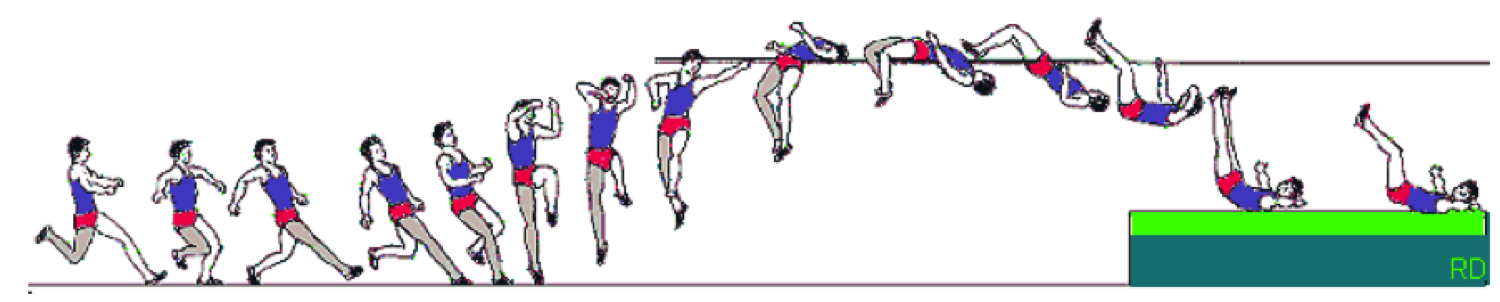
Dick Fosbury is one of the most influential athletes in the history, he completely revolutionized the high jump event, inventing a unique “back-first” technique, now known as the Fosbury Flop, adopted by almost all high jumpers today. At the 1968 Olympics in Mexico City, he took the gold medal and set a new record.

The high jump is a good example of changing the way we think about progress and became a means for improving performance.

The athletes jumped before Fosbury using this technique:

High Jump

And this is the Fosbury Flop:

Fosbury Flop

What did we learn about this process?

  • It was not easy: Fosbury took 5 years in getting to the top of the innovation curve, at this point he was ready to compete. Changes within companies are difficult to implement, and returns are not achieved in the short-term.
  • It was easier the status quo: The straddle technique was being used for centuries. While implementing major changes within the company, the resistance is though.
  • There are always detractors: The USA Track & Field took more than 6 years to recommend the Fosbury flop, even knowing that technically it was superior to the straddle method. The investments in transformation, change and innovation are always criticised, but even today where there is a credit crunch and the global recession.
  • Change was not quick: The Fosbury Flop took a decade to start being used by the athletes. Companies usually take too much time to  assimilate the transformation produced by innovation projects. Complex and major projects are taking more time than planned.
  • It was efficient and gave results: By using the Fosbury Flop the jump records increased by 10 centimeters.
  • Change or die: Everyone who decided to ignore the innovation couldn’t compete

Reducing the gap between the theoretical best practice and even the demonstrated best practice is almost always a question of changing the existing way of thinking about how to increase performance.

This illustrates the idea that people can not simply be told to accept a new way of doing something, even if it will make progress happen.

People need to experience for themselves how adopting a new process will be beneficial and have to be taught this in a way that it makes sense to them.

11 responses to “Change Management and High Jump”

  1. Rick Maurer Avatar

    Carlose –

    Great story. The focus of my work is resistance to change in organizations and I am always looking for good examples. You’ve just given me one. Thanks.

    1. carloselopez Avatar
      carloselopez

      Thank you Rick for your comments. I have presented this story to the Change Director at the company I consult, we have used this simple case study to illustrate a great success story in a common and simple language. I will have a better look at your blog http://www.rickmaurer.com, it’s very helpful as well.

  2. Strategy Execution and Cultural Change | Carlose Lopez | Blog Avatar

    […] Related article: Change Management and High Jump […]

  3. 6 Steps for Effective Change Management | Carlose Lopez | Blog Avatar

    […] Organisational change is a structured approach in an organisation for ensuring that changes are smoothly and successfully implemented to achieve lasting benefits. […]

  4. Hugues Desesquelles Avatar

    ‘The straddle technique was being used for centuries’
    Wrong: the straddle technique had hardly been used for more than 20 years when Fosbury came into light. Before that, athletes would jump in s.c. coastal or scissors styles.

    ‘By using the Fosbury Flop the jump records increased by 10 centimeters’
    Wrong: Fosbury’s personal best was 4 cm lower than V. Brumel’s straddle record at the time. The performance increase after Fosbury is mainly due to the introduction of new materials (in both take-off and landing areas) and training techniques.

    ‘Everyone who decided to ignore the innovation couldn’t compete’
    Wrong: In 1977, V. Yaschenko straddled a new outdoor World record at 2.33m during a USA vs. USSR competition in Richmond. He went on to win the European Indoor Championships in Milan the next year with 2.35m and finally broke the outdoor World record again in Tbilissi with 2.34m that same year.

    All in all, what the Fosbury case actually shows is that s.c. ‘change’ may rapidly become a habit, if not a dogma, and finally a dead end (the high-jump World record has not moved since J. Sotomayor’s 2.45 m back in… 1993!).

  5. Carlose Lopez Avatar

    Hi Hugues thanks a lot for the well documented correction; I wanted to write an analogy on how change can drive innovation, improvements and how people react.

    1. Hugues Desesquelles Avatar

      Hi Carlos, thank you for accepting my post. I know it goes a bit against the tide, but my point was (and is) that past innovation may rapidly convert in today’s blockage. Taking the high-jump example, I am convinced a return to the straddle technique (at least for thoses athletes with adequate body capacities) may help take the record to new highs and rekindle the sport alltogether.

      1. Jim Hogg Avatar
        Jim Hogg

        Agreed. Time for a reassessment and reintroduction of the straddle As much as resistance to change is a facet of human behaviour, so also are the attraction of the new/change and the acceptance of and following of fashion. The flop became fashionable and remains so. Given that in nearly 50 years the flop has only added 11 cms (and that was in the early 90s) to the best straddle from the 70s, and given the change in the relevant materials you mention and the tendency for records to continually be broken as humans aim ever higher (npi), and the increasing population from which ever more competitors are selected (which should produce progress in itself) I don’t think the real world evidence favours the flop in any significant way. Instead I suspect it demonstrates the attractiveness of the new/change and the power of fashion . .

  6. Hugues Desesquelles Avatar

    Now, back to management, it means that change is a continuous, ongoing process and should always be reversible, no matter the past investments. Take a global player that invested heavily on a large scale ERP at the turn of the Century. It should not be prevented to return to leaner, more decentralized organization modes like those rendered possible by modern cloud technologies

    1. Carlose Lopez Avatar

      Totally agree Hugues in a changing world, a good strategy must have an entrepreneurial component. That is, it must embody some ideas or insights into new combinations of resources for dealing with new risks and opportunities.

      1. rick maurer Avatar
        rick maurer

        Please take me off your mailing list. I have received a dozen emails and my request to stop comments to your post isn’t working. It hate to do this, but I am getting too much email thanks

Leave a comment